


AI Safety Tools May Reduce Injuries, But Workers’ Comp Rights Still Matter
New research funded by the National Safety Council shows that artificial intelligence and augmented reality could help reduce the risk of workplace injuries, according to a report from Occupational Health & Safety. The findings come from the latest round of the National Safety Council’s Research to Solutions and MSD Solutions Pilot Grant programs, both managed through the council’s MSD Solutions Lab.
Musculoskeletal disorders, including back strains, tendinitis, carpal tunnel syndrome, and other overuse injuries, remain some of the most common workplace injuries in the country. These injuries can develop slowly from repetitive motion, awkward posture, vibration, lifting, reaching, or forceful exertion. They may not happen in one dramatic moment, but they can still leave workers unable to do their jobs.
So what does this mean for New York workers? Our NYC workers’ compensation attorneys at Pasternack Tilker Ziegler Walsh Stanton & Romano, LLP have represented injured workers for over 90 years. New technology may help prevent some injuries, but it doesn’t erase an employer’s obligations, and it doesn’t take away an injured worker’s right to pursue benefits.
What Did The New Research Find?
The research comes from the NSC’s MSD Solutions Lab, which funds academic and industry partnerships focused on reducing musculoskeletal disorders. According to Occupational Health & Safety, the lab has backed 35 separate projects and invested more than $1 million into scalable safety practices.
The latest research cycle focused heavily on digital tools. Several university teams studied how AI, augmented reality, smartphone video, machine learning, and exoskeletons could identify risky movements before they become injuries.
One of the most important findings was not just about the technology itself. Researchers found that direct feedback from frontline workers was essential. A safety tool that looks strong in a lab only matters if workers trust it, understand it, and can actually use it during a shift.
How Are Universities Using AI And Augmented Reality To Prevent Injuries?
Several universities tested safety tools designed to identify ergonomic risks before workers suffer serious injuries. North Carolina State University created an augmented reality program that lets workers view their ergonomic reach limits in real time. In plain terms, the tool can show a worker when a reach, bend, or movement places excessive strain on the body.
Oregon State University used smartphone video and machine learning to estimate the risk of lower back injuries. That matters because most workers already carry smartphones, which could make some safety screening tools easier to use in real workplaces.
Virginia Tech built an artificial intelligence model designed to make physical exposure assessments more accurate and fair. Wichita State University studied how arm-support exoskeletons perform on active construction sites, where workers often perform overhead work for long periods.
These developments fit into a broader workplace safety trend. Employers are paying more attention to ergonomics and workplace injury prevention, especially in jobs that require repetitive lifting, reaching, bending, gripping, twisting, or overhead work.
What Technologies Are Employers Testing In The Field?
Alongside the university research, employers piloted emerging safety technologies directly in active workplaces. The field tests were designed to show whether these tools could work under real conditions, not just in controlled research settings.
Tools tested in the field included:
- Computer Vision Systems: Cameras and software that monitor movement patterns and flag risky postures, repetitive strain, or unsafe body mechanics in real time.
- Wearable Vibration Monitors: Devices that track a worker’s exposure to vibration from tools and machinery over the course of a shift.
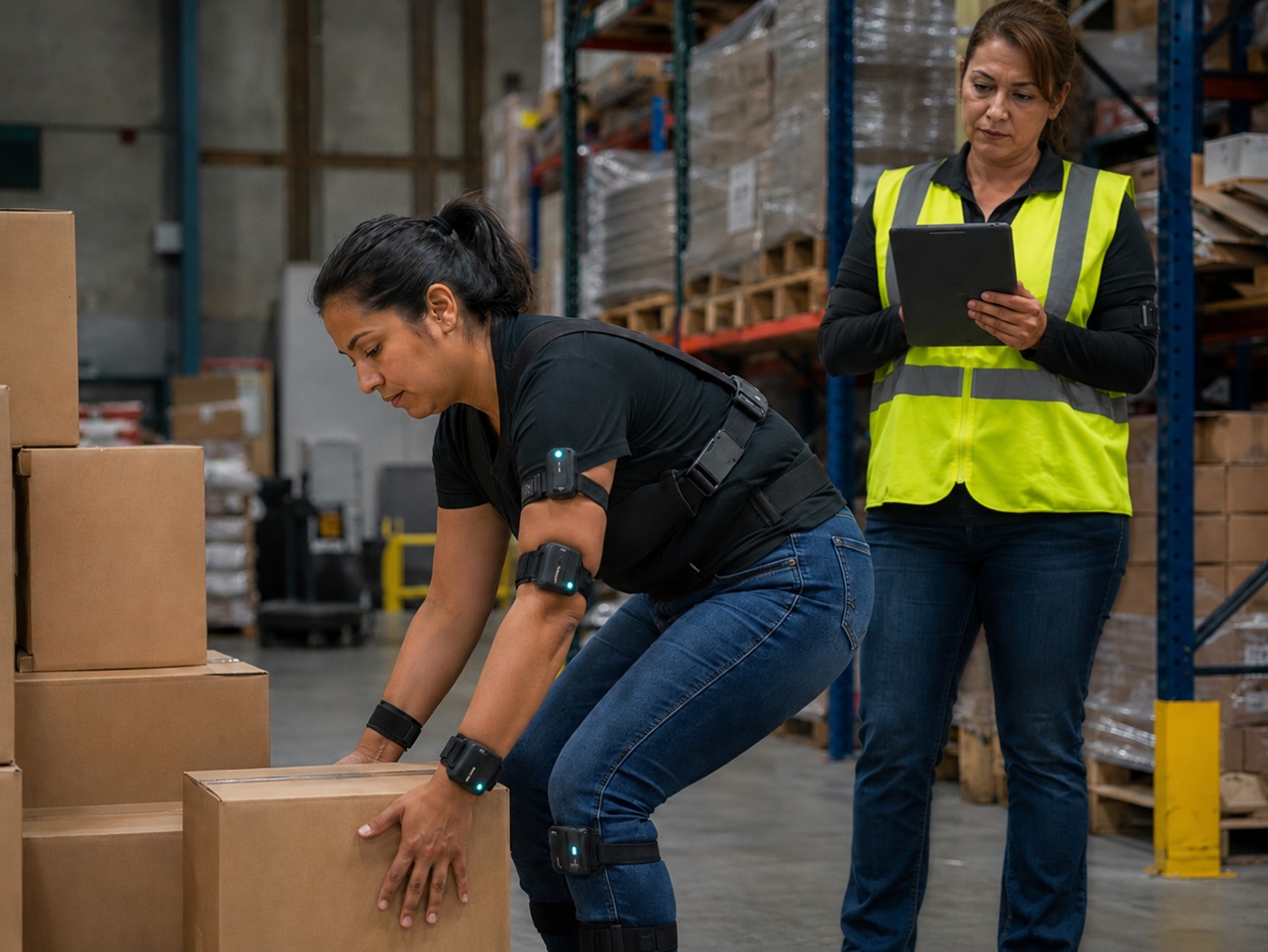
- Sensor-Based Ergonomic Tools: Wearable sensors that measure how a worker bends, lifts, reaches, twists, or repeats certain movements during the workday.
According to the research, these field tests gave employers better visibility into daily physical risks, increased engagement from frontline staff, and helped create more precise safety interventions.
Does New Safety Technology Reduce An Employer’s Legal Responsibility?
No. New safety technology is meant to prevent injuries before they happen. It should not be used as a shield after a worker gets hurt. If a worker is injured on the job in New York, they may still be entitled to workers’ compensation benefits regardless of whether the employer used AI tools, wearable sensors, ergonomic software, or other safety systems.
In some cases, safety technology may actually help prove a claim. Data from a wearable sensor, computer vision system, or ergonomic monitoring tool could help show how much force, repetition, awkward posture, or vibration a worker experienced before an injury developed.
That kind of documentation did not exist in the same way a decade ago. It could become important evidence in claims involving overuse injuries, repetitive stress injuries, back injuries, shoulder injuries, and other workplace conditions that develop over time.
What Are Musculoskeletal Disorders?
Musculoskeletal disorders, often called MSDs, are injuries or conditions that affect muscles, tendons, ligaments, nerves, joints, discs, and other soft tissues. They are often caused or worsened by repetitive motion, awkward posture, forceful exertion, vibration, lifting, pushing, pulling, or prolonged physical strain.
Common workplace MSDs include:
- Back Strains: These injuries can happen from lifting, bending, twisting, pushing, pulling, or repeated physical stress over time.
- Tendinitis and Tenosynovitis: These tendon conditions can develop from repetitive motion, forceful gripping, awkward positioning, or overuse.
- Carpal Tunnel Syndrome: This nerve condition can affect workers who perform repeated hand and wrist motions, including warehouse, fulfillment, office, healthcare, and manufacturing workers.
- Shoulder Injuries: These injuries can affect workers who repeatedly lift, reach overhead, carry tools, stock shelves, handle patients, or perform construction and maintenance work.
Unlike a fall, crash, or machinery accident, an MSD often develops gradually. That can make it harder for workers to identify the exact moment the injury began. But that does not make the injury any less real or any less compensable under New York workers’ compensation law.
Can You Get Workers’ Comp For A Gradual Workplace Injury?
Yes. Workers’ compensation may cover injuries and illnesses caused by job duties even when there was no single accident. A worker who develops carpal tunnel syndrome from repetitive hand motions, a back injury from repeated lifting, or tendinitis from overhead work may still have a valid claim.
The challenge is proof. Insurance companies may argue that the injury came from age, hobbies, a pre-existing condition, or activities outside work. They may also say there was no “accident” because symptoms developed slowly.
That is why these claims often depend on strong medical evidence and a clear description of the worker’s job duties. Workers should not assume they are out of options just because their injury developed over weeks, months, or years. Many injuries and illnesses are covered by New York workers’ compensation when the evidence connects them to the job.
What Evidence Helps Prove A Workplace Injury Claim In New York?
Whether an injury develops gradually or happens all at once, evidence matters. Insurance companies often look for reasons to dispute claims, especially when the injury involves repetitive motion, ergonomics, or symptoms that build over time.
Helpful evidence may include:
- Medical Records: A treating doctor’s notes should connect the injury to the worker’s job duties, explain the diagnosis, and document work restrictions.
- Workplace Incident Reports: These records can show when and how the worker reported the injury, but they must be accurate, as insurers may use vague or incomplete reports against the worker later.
- Ergonomic Or Safety Technology Data: Information from wearable sensors, computer vision systems, vibration monitors, or ergonomic software may help show the physical demands placed on the worker’s body.
- Witness Statements: Coworkers may be able to describe the job’s physical demands, repetitive tasks, lifting requirements, staffing shortages, unsafe work setups, or changes in the worker’s condition.
- Job Duty Documentation: Schedules, task lists, production quotas, photos of the workstation, tool records, and job descriptions can help show how the work caused or worsened the condition.
Workers should also be careful when describing their injury on claim forms. A vague description can lead to delays or denials. Filing a New York workers’ compensation claim requires accurate information about the injury, the job duties involved, and the medical connection between the two.
Could Workplace Monitoring Data Be Used Against Injured Workers?
Yes, it could. Safety technology may help prevent injuries, but workers should also understand that workplace data can become part of a disputed claim. If an employer or insurance company has access to sensor data, video, productivity logs, badge data, or ergonomic software reports, they may try to use that information to challenge what the worker says happened.
For example, an insurer may argue that the data does not show enough force, repetition, or strain to support the injury claim. They may also point to gaps in the data or claim the worker’s movements do not match the reported symptoms.
That does not mean workers should fear every safety tool. It means documentation needs to be handled carefully. The same data an insurer tries to use against a worker may also reveal the job’s real physical demands when reviewed in context.
What Should Workers Do After A Repetitive Stress Or Ergonomic Injury?
Workers who suspect that their job caused or worsened an injury should act quickly. Gradual injuries can be harder to prove when workers wait too long to report symptoms, delay medical care, or keep working until the condition becomes severe.
Important steps include:
- Report the Injury: Tell a supervisor that the injury is related to work duties and document the report in writing when possible.
- Get Medical Care: Tell the doctor exactly what tasks you perform at work, how often you perform them, and when symptoms started.
- Save Evidence: Keep photos, schedules, messages, incident reports, job descriptions, and any available safety or ergonomic data.
- Avoid Guessing On Forms: If you are not sure how to describe a gradual injury, get guidance before filing paperwork that could later be used against you.
- Talk To An Attorney: Repetitive stress claims often turn on medical proof, timing, and work-duty details. Legal help can make a major difference.
Workers who are unsure where to begin may benefit from reviewing what to bring to a workers’ comp consultation, especially if their claim involves medical records, work restrictions, claim forms, or a potential denial.
How Can an NYC Workers’ Compensation Lawyer Help?
New technology may eventually reduce the frequency of workplace injuries. Still, it has not eliminated workplace injuries, nor has it made the workers’ compensation process easier to handle on one’s own.
Our attorneys at Pasternack Tilker Ziegler Walsh Stanton & Romano, LLP know how complicated these claims can become for injured workers and their families. We have been doing this work in New York for over 90 years, including helping workers with musculoskeletal disorders, repetitive stress injuries, back injuries, shoulder injuries, carpal tunnel syndrome, and other conditions that developed gradually on the job.
If your claim has been delayed, disputed, or denied, or if you are not sure whether your injury qualifies, our firm can explain your options and help you take the next step. Workers often need legal help when the insurance company challenges whether the injury is job-related, disputes medical treatment, questions disability, or pushes the worker back before they are ready.
If you were hurt at work anywhere in New York City, contact us today for a free, confidential consultation. We can answer your questions, explain your legal options, and help you fight for the workers’ compensation benefits you deserve.
“The firm treated me with respect and dignity and handle all my workers comp issues with ease. I highly recommend them. Thank you.” – Eduardo D., ⭐⭐⭐⭐⭐
Prior results do not guarantee outcomes.
Attorney Advertising.