


Snow, Ice, Wind, and Flooding Injuries Can Qualify When the Job Puts a Worker in Harm’s Way
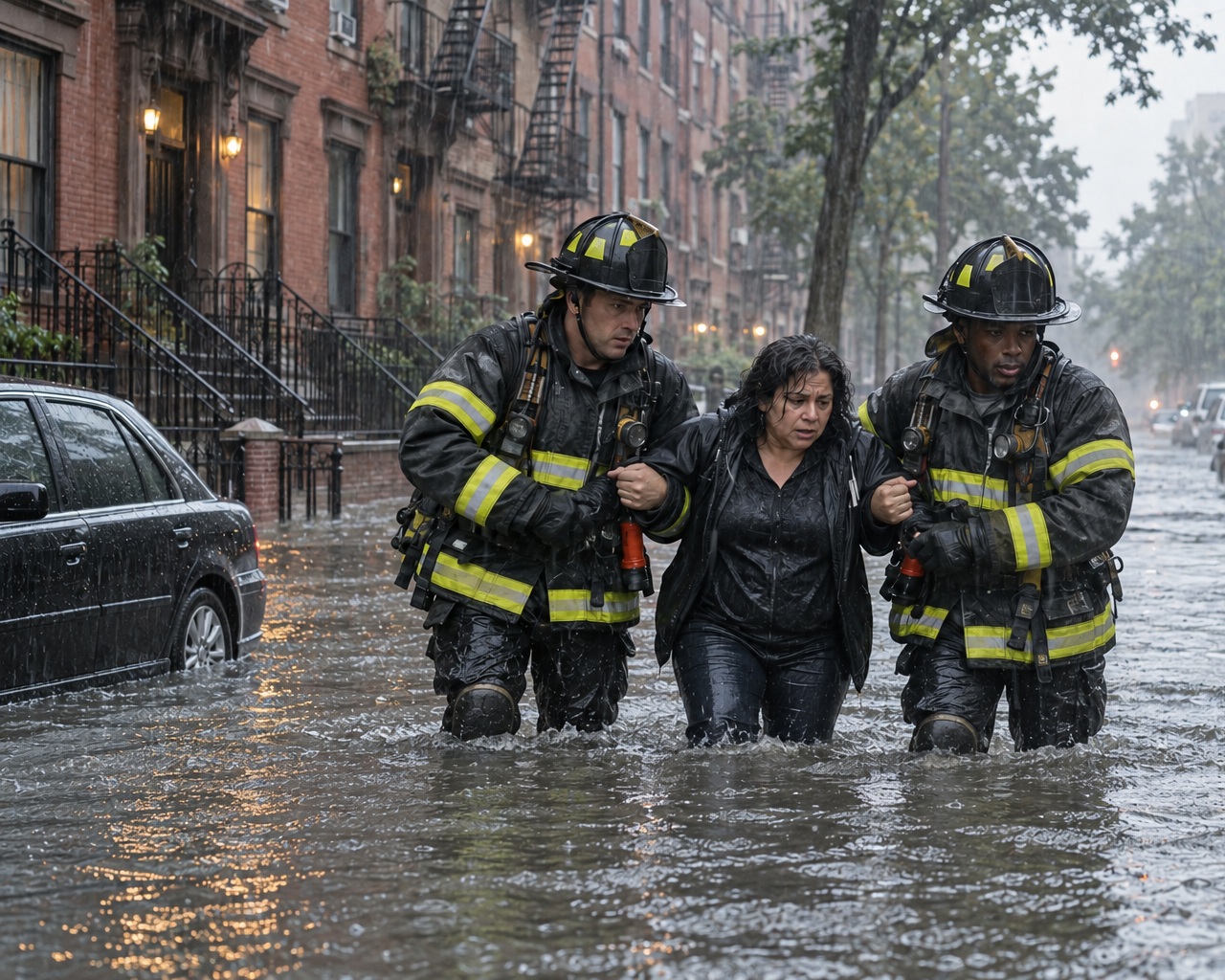
Workers’ comp in New York can cover storm-related injuries, from falls on ice to injuries from falling tree limbs and flooding. What matters is whether the injury happened while the person was doing their job. Bad weather doesn’t take away a worker’s right to benefits, even though many insurance companies act as if it does.
Insurers often call storm injuries an “act of God” that had nothing to do with work. That argument leaves many hurt workers without the medical care and wage benefits they need. A New York workers’ compensation lawyer can show how the job put a worker in the storm’s path. That proof can stop an insurer from blaming the weather.
|
Key Takeaways
|
When Is a Storm Injury Considered Work-Related?
New York workers’ comp covers injuries that happen because of the job and while doing the job. A storm doesn’t change that basic rule. Picture a worker who slips on ice during a delivery or gets hit by flying debris on a job site. That injury can be covered. It doesn’t matter that the weather played a role.
Insurance companies often argue that everyone in the city faced the same storm. But most people could stay inside. Workers whose jobs sent them out into the weather, or kept them working through it, faced a risk the public didn’t. New York law also helps here. Under Workers’ Compensation Law Section 21, a claim is presumed to be covered unless the insurer offers substantial evidence to the contrary.
Indoor workers can be hurt by storms too. A roof leak can leave a slick floor in an office or warehouse. A power outage can plunge a stairwell into darkness. Floodwater can pour into a basement workspace. When those hazards cause a workplace injury, the worker may have a valid claim even if they never stepped outside.
Common Storm Injuries Among New York Workers
Storms create hazards that can cause serious harm in seconds. Workers across New York face these risks every winter and hurricane season.
- Slips and Falls on Ice and Snow: Icy sidewalks, steps, loading docks, and work sites can lead to broken bones and head injuries.
- Falling Trees and Debris: Strong winds can knock down branches, signs, and scaffolding materials onto workers below.
- Electrocution: Downed power lines and flooded electrical equipment can cause severe electrical burns and shocks.
- Cold-Related Injuries: Frostbite and hypothermia can strike workers who spend long hours outside in freezing weather.
- Back and Shoulder Injuries: Shoveling snow and clearing storm damage can strain muscles and damage discs.
Some of these injuries don’t show up right away. Frostbite damage may take hours to appear, and a back strain can get worse overnight. Getting medical care quickly creates records that tie the injury to the workday. A lawyer can use those records to show the injury happened on the job.
Workers Who Face the Highest Risk During Storms
Some jobs can’t stop for bad weather. Delivery drivers keep making stops in snow and sleet, though app-based drivers’ coverage can depend on whether they’re treated as independent contractors. Construction and road crews often work until conditions become dangerous. Utility line workers head out during and after storms to restore power. Sanitation workers clear streets and haul debris long after the storm passes.
First responders face some of the greatest danger. Police officers, firefighters, and EMTs rush toward storms while everyone else takes cover. They work around downed lines, floodwater, and wrecked buildings. Many police officers and firefighters have separate line-of-duty benefits instead of workers’ comp, and some public workers may also qualify for civil service disability pensions.
Remote workers aren’t always left out. Someone working from home who’s hurt during a storm may still have a claim if they were doing work at the time. For example, a fall while carrying work files during a blackout may count. These cases depend on the details, so getting legal advice early is important.
Is a Storm Injury on the Way to Work Covered?
In most cases, workers’ comp doesn’t cover injuries during a regular commute. A worker who slips on an icy sidewalk on the way to the subway usually can’t file a claim. The same generally applies to a crash while driving from home to the office. This rule surprises many workers after a bad winter storm.
There are important exceptions, though. Workers who drive a company vehicle may be covered. So may workers traveling between job sites or running an errand for the boss. For delivery drivers, home health aides, and others whose travel is part of the job, the trip itself is work. These rules for commuting injuries turn on the facts.
Location can also make a difference. A fall in a parking lot or entrance the employer controls may be covered, even before the shift starts. These lines can be hard to draw. A lawyer can review exactly where and how the injury happened to see whether it qualifies. Here’s how some common storm injury situations may play out.
| Scenario | Likely Covered? | Why |
|---|---|---|
| A delivery driver slips on an icy porch during a delivery | Yes | The driver was doing the job when hurt |
| A construction worker is hit by wind-blown debris on site | Yes | The work site exposed the worker to the hazard |
| An office worker falls on the employer’s icy entrance | Often | The employer controls the area |
| An employee crashes while driving home from the office | Usually not | Regular commutes generally aren’t covered |
| A utility worker is shocked by a downed power line | Yes | Repairing storm damage was the job |
| A remote employee falls in a home office during a blackout | Possibly | It depends on whether they were working |
Third-Party Claims After a Storm Injury at Work
Workers’ comp isn’t always the only source of money after a storm injury. Sometimes a company or someone other than the employer caused the harm. A property owner who didn’t clear ice from a walkway may be responsible for a sidewalk fall. So may a driver who caused a crash by speeding on a snowy road.
Construction workers have extra protections under New York law. Under the state’s Industrial Code, workers must remove, sand, or cover ice, snow, and other slippery substances on work surfaces. Contractors and property owners sometimes ignore those rules. If a worker gets hurt as a result, they may be able to file a separate lawsuit on top of workers’ comp. Workers hurt in construction accidents often have more options than they realize.
These outside claims matter because workers’ comp doesn’t pay for pain and suffering. A lawsuit against a property owner or driver can cover those losses, along with full lost wages. A lawyer can review every party involved and pursue each applicable claim. That way, no source of money gets missed.
Steps to Take After a Storm Injury at Work
Storm injuries pose a unique problem because evidence can melt, wash away, or be cleaned up within hours. Quick action can protect both a worker’s health and their claim.
- Report the Injury in Writing: New York law gives workers 30 days to notify the employer, but reporting right away is best.
- Get Medical Care Right Away: A doctor’s visit creates a record that links the injury to the workday.
- Photograph the Conditions: Pictures of ice, debris, or flooding show what caused the injury before it disappears.
- Get Coworker Names: Witnesses can confirm what happened and what the conditions were like.
- Save Work Orders and Schedules: Dispatch records and shift schedules prove the worker was on the job.
Workers also have a deadline to file the claim itself. In most cases, you must file a claim within two years of the injury. Waiting can let evidence fade and give the insurer more room to argue. A lawyer can gather proof while it still exists and handle every deadline from the start.
Don’t Let an Insurer Blame the Weather
Storm injuries can leave workers out of work for weeks or months. Insurers know that, and they often use the weather as an excuse to deny claims. Hurt workers don’t have to accept that answer. The right legal team can show how the job put them in danger and fight for the benefits they’ve earned.
For more than 90 years, Pasternack Tilker Ziegler Walsh Stanton & Romano LLP has stood up for injured workers across New York. We have recovered billions of dollars for thousands of New Yorkers. Our attorneys represent union members, first responders, and workers in every kind of job. We have offices across New York City and the state.
We take workers’ comp cases on a contingency fee, so there’s no fee unless we win benefits for you. Our team is available 24/7, and we speak Spanish. Talk with our team today about a free consultation and the next steps for your claim.
“Today I attended my workers’ compensation hearing, and I’m pleased to report that the outcome was positive thanks to Scott Black’s representation. Before the hearing, he reached out to me to discuss the details and ensure I was prepared. Later that evening, he called again to see if I had any questions. I was really appreciative of how much time he dedicated to addressing my concerns and reviewing my case, especially considering it was after a long day and already 6 p.m. His commitment to helping me was truly impressive.” — Jeannette L., ⭐⭐⭐⭐⭐
Prior results do not guarantee outcomes.
Attorney Advertising.